All topics
Practice this topic

Strand 1: Organisation of Life

Animal & Plant Kingdom

Animal features, body plans, symmetry, coelom, plant diversity, vascular vs non-vascular, bryophytes to angiosperms.

Key Features of Animals

In brief:The animal kingdom (Animalia) is vast with ~8 million species. All animals share common traits that define them as a group.

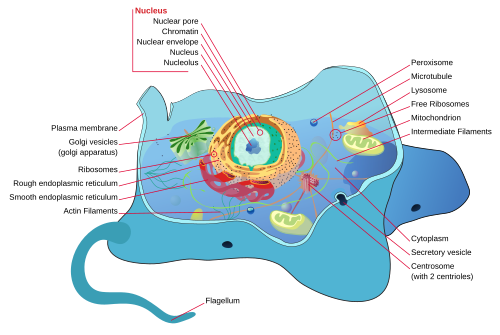
Animal cell

Typical animal cell

Wikimedia Commons (CC)

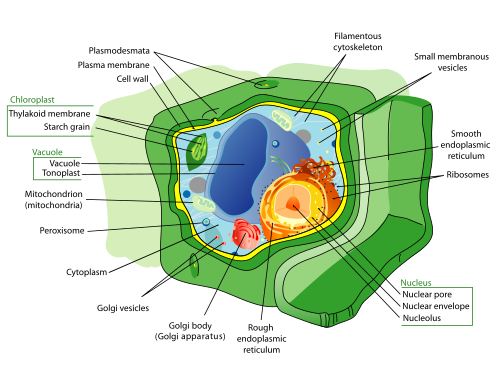
Plant cell

Typical plant cell

Wikimedia Commons (CC)

Key Points

  • 1All animals are multicellular eukaryotic organisms.
  • 2Heterotrophic - they consume other organisms for food.
  • 3Use aerobic respiration for energy.
  • 4Can move at some point in their life cycle.
  • 5Have specialised cells (muscles, nerves) - cell diversity.
  • 6Reproduce sexually via sperm and egg cells.
  • 7Form complex body structures from blastula stage during embryonic development.

Learning Outcomes

  • Outline the characteristics of living things
  • Use classification principles to identify and classify living things in known and unknown contexts; outline the importance of classification systems in biology

Animal Body Plans & Symmetry

In brief:Animals are classified based on their body symmetry and whether they have a body cavity (coelom). These structural patterns reflect evolutionary relationships.

Key Points

  • 1Asymmetrical: no defined shape - e.g. sponges. Simplest animals, no true tissues or organs.
  • 2Radial symmetry: can be divided into equal sections from centre - e.g. jellyfish, starfish. Have tissues but lack organs.
  • 3Bilateral symmetry: mirror-image left/right halves - e.g. humans, insects. Most complex, with organs and systems.
  • 4Cephalisation: development of a head with concentrated sensory organs and brain (in bilateral animals).
  • 5Coelom: a fluid-filled body cavity containing organs. Provides protection, space for organs, support for movement.
  • 6Coelomates: animals with a coelom - e.g. earthworms, fish, birds, humans.
  • 7Acoelomates: animals without a coelom - e.g. flatworms, tapeworms. Incomplete digestive system.

Learning Outcomes

  • Use classification principles to identify and classify living things in known and unknown contexts; outline the importance of classification systems in biology

The Plant Kingdom

In brief:Plants are a diverse group of ~500,000 species. They are classified based on differentiation, vascular tissue, seed production, and fruit production.

Key Points

  • 1All plants are multicellular, eukaryotic, with cellulose cell walls.
  • 2All plants are autotrophic - make food through photosynthesis using chloroplasts containing chlorophyll.
  • 3Non-vascular plants (Bryophytes): mosses, liverworts - no transport tissue, small, need moist habitats.
  • 4Vascular plants have xylem and phloem for transport - grow larger.
  • 5Pteridophytes: ferns - vascular, reproduce by spores, no seeds.
  • 6Gymnosperms: conifers - vascular, produce seeds in cones (naked seeds), no flowers.
  • 7Angiosperms: flowering plants - vascular, produce seeds enclosed in fruits. Most diverse group.
  • 8Co-evolution: angiosperms evolved alongside their pollinators (insects, birds).

Learning Outcomes

  • Use classification principles to identify and classify living things in known and unknown contexts; outline the importance of classification systems in biology

4. The Major Animal Phyla

In brief:The animal kingdom is divided into around 35 phyla based on body plan, symmetry and embryonic development. Nine are commonly studied at Leaving Cert.

Zoologists group animals into phyla using shared body-plan features - symmetry, presence of a coelom, segmentation, type of skeleton, and details of embryonic development. The nine phyla below cover the main branches of the animal tree.

  • Porifera (sponges) - asymmetrical, sessile filter feeders. No true tissues or organs.
  • Cnidaria (jellyfish, corals, anemones) - radial symmetry, specialised stinging cells (cnidocytes), a simple sac-like gut.
  • Platyhelminthes (flatworms, tapeworms) - bilaterally symmetrical, flattened bodies, no body cavity, single gut opening. Many are parasites.
  • Nematoda (roundworms, pinworms) - long, cylindrical, bilateral bodies with a pseudocoelom. Many are parasites of plants or animals.
  • Annelida (earthworms, leeches) - bilateral, segmented bodies with a true coelom and a complete gut.
  • Arthropoda (insects, spiders, crustaceans) - jointed limbs and a hard exoskeleton made of chitin that is moulted for growth. Largest phylum by species number.
  • Mollusca (snails, slugs, octopus, mussels) - soft-bodied, most with a shell of calcium carbonate. Many have a rasping tongue called a radula.
  • Echinodermata (starfish, sea urchins) - radial symmetry as adults (bilateral as larvae), internal skeleton of calcium carbonate plates, unique water-vascular system driving tube feet.
  • Chordata (fish, amphibians, reptiles, birds, mammals) - bilateral, complete coelom, and a stiff nerve cord along the back (in vertebrates this becomes the spinal cord protected by a vertebral column).
table

Nine Key Animal Phyla

PhylumSymmetryCoelomKey featureExample
PoriferaNoneNoFilter-feeding spongeBath sponge
CnidariaRadialNoStinging cellsJellyfish
PlatyhelminthesBilateralNoFlattened bodyTapeworm
NematodaBilateralPseudoCylindrical wormRoundworm
AnnelidaBilateralTrueSegmented bodyEarthworm
ArthropodaBilateralTrueExoskeleton, jointed limbsHoney bee
MolluscaBilateralTrueSoft body, often shelledOctopus
EchinodermataRadial (adult)TrueWater-vascular systemStarfish
ChordataBilateralTrueDorsal nerve cordHuman

Key Points

  • 1Porifera and Cnidaria are the only phyla without bilateral symmetry as adults.
  • 2Arthropoda is the most species-rich phylum, defined by exoskeleton and jointed limbs.
  • 3Annelids and vertebrates both have a true coelom and a complete gut.
  • 4Echinoderms are bilateral as larvae but develop radial symmetry as adults.
  • 5Chordates have a dorsal nerve cord; vertebrates protect it inside a backbone.

Learning Outcomes

  • Use classification principles to identify and classify living things in known and unknown contexts; outline the importance of classification systems in biology

5. Classification & Mammal Sub-Classes

In brief:Every animal is placed in a nested hierarchy from Kingdom down to Species. Mammals split into three sub-classes based on how they reproduce.

The full taxonomic hierarchy runs: Kingdom → Phylum → Class → Order → Family → Genus → Species. A dog, for example, is Animalia → Chordata → Mammalia → Carnivora → Canidae → Canis → familiaris.

Within Class Mammalia, three sub-classes are recognised, based on reproduction:

  • Monotremes - egg-laying mammals. Only five living species, including the platypus and echidnas.
  • Marsupials - young are born tiny and undeveloped, then complete development in a pouch. Examples: kangaroos, koalas, opossums.
  • Placentals - young develop fully inside the uterus, nourished through a placenta. The largest group, including humans, whales, bats and mice.

Rough timeline of animal evolution (from the fossil record):

  • ~600 million years ago - first simple multicellular animals
  • ~400 million years ago - insects appear on land
  • ~300 million years ago - reptiles diversify
  • ~200 million years ago - first mammals
  • ~150 million years ago - earliest birds
  • ~60 million years ago - primates diversify after dinosaur extinction
  • ~300,000 years ago - anatomically modern Homo sapiens
process

Taxonomic Hierarchy

KingdomPhylumClassOrderFamilyGenusSpecies

Key Points

  • 1Classification runs Kingdom → Phylum → Class → Order → Family → Genus → Species.
  • 2Monotremes lay eggs (platypus, echidna).
  • 3Marsupials complete development in a pouch (kangaroo, koala).
  • 4Placentals nourish young via a placenta - humans, whales, mice.
  • 5Mammals appeared ~200 mya; modern humans only ~300,000 years ago.