1. Ecosystem Structure
In brief:An ecosystem is a community of living organisms interacting with their non-living environment. It has two main components: biotic (living) and abiotic (non-living).
The biosphere is the part of Earth where life exists - from deep ocean vents to mountain peaks. Within the biosphere, organisms live in specific ecosystems.
An ecosystem = biotic community + abiotic environment. Examples include a woodland, a pond, a rocky seashore, or a hedgerow.
Biotic factors are living influences: competition, predation, parasitism, disease, symbiosis, and interdependence (e.g. bees pollinating flowers).
Abiotic factors are non-living influences: temperature, light intensity, pH, soil moisture, humidity, wind speed, mineral content, and dissolved oxygen.
Every ecosystem has a carrying capacity - the maximum population size an environment can sustain indefinitely. If a population exceeds carrying capacity, resources become scarce, leading to competition, disease, or emigration.
Key concept: Organisms do not exist in isolation. Every living thing depends on other organisms for food, shelter, reproduction, or nutrient cycling.
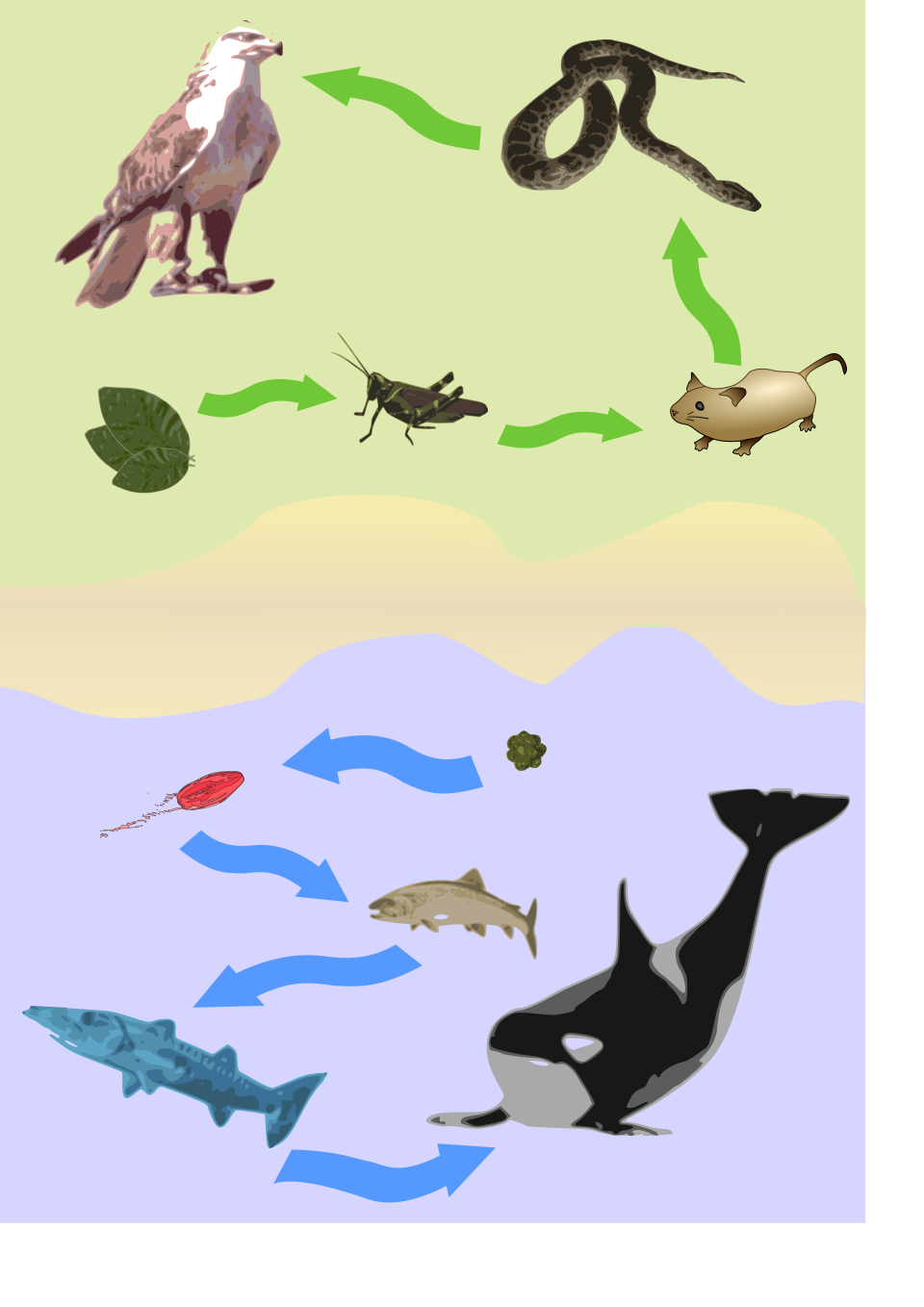
Feeding relationships in an ecosystem
Wikimedia Commons (CC)
Biotic vs Abiotic Factors
Biotic (Living)
- Competition
- Predation
- Parasitism
- Symbiosis
- Decomposition
- Interdependence
Abiotic (Non-living)
- Temperature
- Light intensity
- pH of soil/water
- Humidity
- Wind speed
- Dissolved O₂
Key Points
- 1The biosphere is where all life on Earth exists.
- 2An ecosystem = biotic community + abiotic environment.
- 3Biotic factors include competition, predation, symbiosis, and disease.
- 4Abiotic factors include temperature, light, pH, moisture, and wind.
- 5Carrying capacity is the maximum population an ecosystem can sustain.
- 6Organisms are interdependent - they rely on each other for survival.
Learning Outcomes
- Outline what is meant by the biosphere, ecosystems, habitats, biodiversity
- Outline the concept of the niche, using examples as it applies to adaptations of organisms in ecosystems