1. Building Blocks of Life
In brief:Cells are the fundamental units of all living organisms. Some organisms consist of one cell (unicellular) while others are made of many cells (multicellular).
Cells are the building blocks of all organisms. They are extremely small and require a microscope to view. Unicellular organisms (e.g. bacteria) consist of one cell; multicellular organisms are made of many cells.
Eukaryotic vs Prokaryotic Cells
Eukaryotic cells contain a nucleus and organelles (animals, plants, fungi). Prokaryotic cells lack a nucleus - their DNA is in a circular chromosome called a nucleoid (bacteria, archaea).
Animal vs Plant Cells
| Feature | Animal Cell | Plant Cell |
|---|---|---|
| Cell wall | No | Yes (cellulose) |
| Chloroplasts | No | Yes |
| Vacuole | Small/temporary | Large, permanent |
| Cell membrane | Yes | Yes |
| Nucleus | Yes | Yes |
Electron Microscopes
Light microscopes magnify up to ~400×. Electron microscopes magnify up to 1,000,000×, revealing cell ultrastructure. Transmission EM (TEM) shows internal structure; Scanning EM (SEM) shows surface detail.
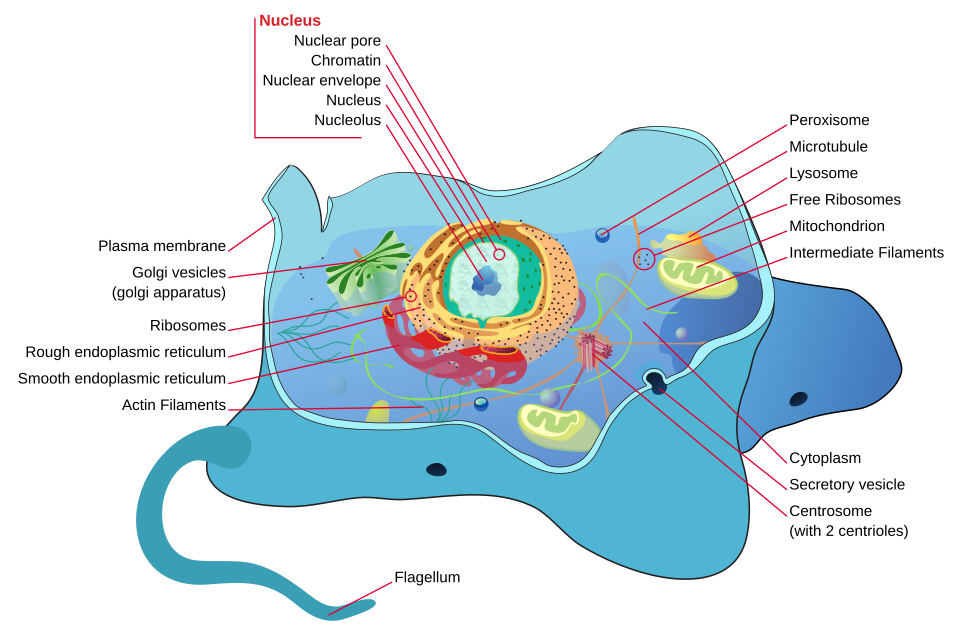
Animal cell
Wikimedia Commons (public domain / CC)
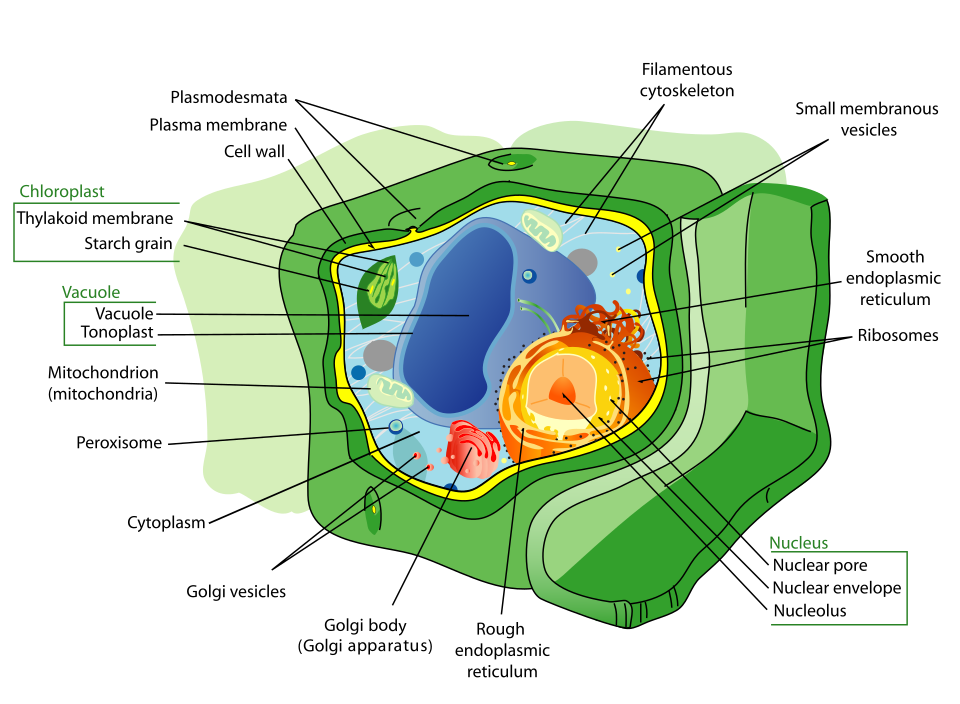
Plant cell
Wikimedia Commons (public domain / CC)
Key Points
- 1Cells are the organisational unit of life
- 2Eukaryotic cells have a nucleus and organelles; prokaryotic cells do not
- 3Plant cells have a cell wall, chloroplasts, and large vacuole - animal cells do not
- 4Electron microscopes reveal ultrastructure not visible with light microscopes
- 5Protoplasm = nucleus + cytoplasm; cytoplasm = cytosol + organelles
Learning Outcomes
- Describe the complexity of multicellular organisms
- Compare the structure of prokaryotic and eukaryotic cells