1.1 Characteristics of Living Things
In brief:All living organisms share certain characteristics that distinguish them from non-living things. These characteristics form the basis for defining life.
All living organisms share 8 characteristics that distinguish them from non-living things. The mnemonic MRS NERG can help you remember them:
Movement - response to stimuli by changing position
Respiration - releasing energy from food molecules
Sensitivity - detecting and responding to changes in the environment
Nutrition - obtaining food for energy, growth, and repair
Excretion - removal of metabolic waste products
Reproduction - producing new individuals of the same species
Growth - permanent increase in size and complexity
Plus Organisation: all living things are made of cells arranged in levels of increasing complexity.
Viruses challenge the definition of life: they have DNA or RNA and can replicate, but they cannot reproduce independently, carry out metabolism, or respond to stimuli. They need a host cell to reproduce.
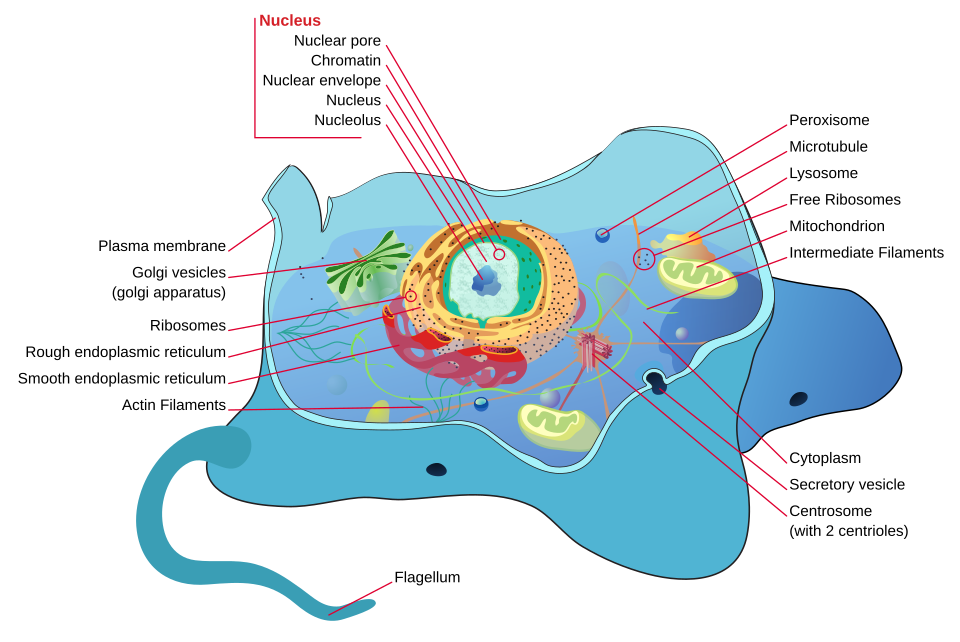
All living things are made of cells - the basic unit of life
Wikimedia Commons (CC)
Levels of Organisation
MRS NERG - Characteristics of Life
| Letter | Characteristic | Meaning | Example |
|---|---|---|---|
| M | Movement | Changing position in response to stimuli | Plant growing towards light |
| R | Respiration | Releasing energy from food | Glucose → CO₂ + H₂O + ATP |
| S | Sensitivity | Responding to environment | Pupil dilating in dark |
| N | Nutrition | Obtaining food | Photosynthesis / eating |
| E | Excretion | Removing metabolic waste | CO₂ from lungs, urea from kidneys |
| R | Reproduction | Producing offspring | Sexual or asexual |
| G | Growth | Increase in size/complexity | Cell division |
Key Points
- 1The characteristics of life: Organisation, Growth, Response, Metabolism, Respiration, Nutrition, Excretion, Reproduction.
- 2Organisation: living things are made of cells arranged in increasing complexity.
- 3Metabolism: all the chemical reactions occurring in an organism (anabolism + catabolism).
- 4Viruses have DNA or RNA and a protein coat but cannot reproduce independently.
- 5Viruses are difficult to classify as living or non-living - they need a host cell to replicate.