3.3 Genetic Engineering
In brief:Genetic engineering involves modifying an organism's DNA to introduce new traits. Modern biotechnology has enormous applications but raises ethical questions.
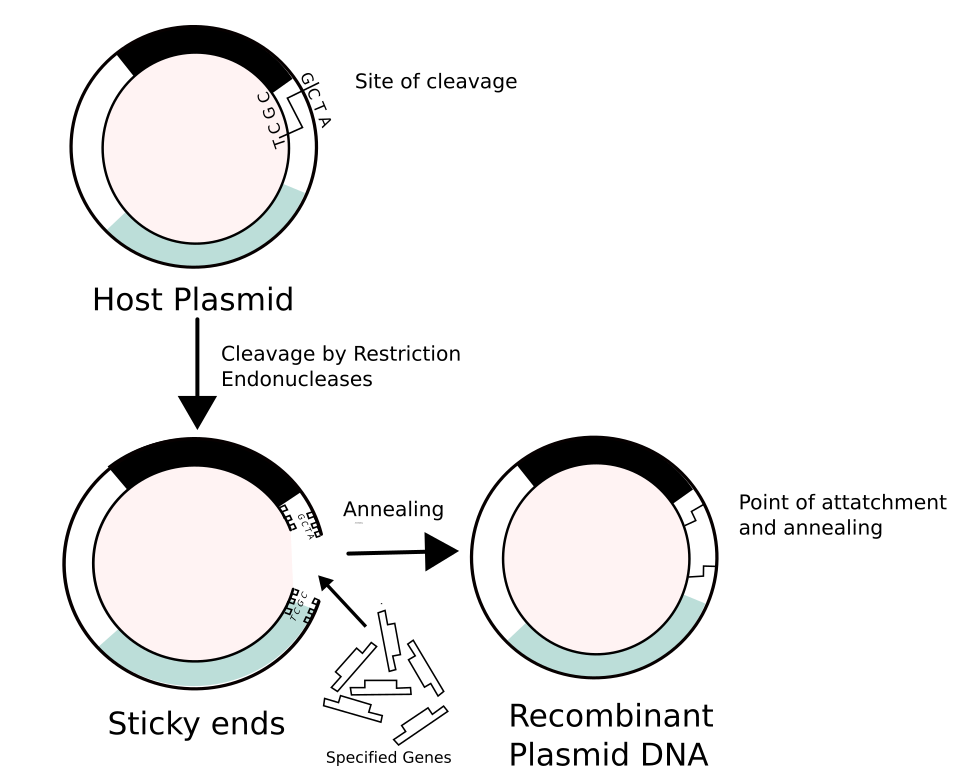
Recombinant plasmid formation using restriction enzymes and ligase
Wikimedia Commons (CC)
Key Points
- 1Genetic engineering steps: DNA isolation → cutting (restriction enzymes) → ligation → transformation → expression.
- 2Restriction enzymes: cut DNA at specific base sequences, creating 'sticky ends'.
- 3Ligase: enzyme that joins DNA fragments together.
- 4Plasmids/vectors: used to carry the gene of interest into a host organism.
- 5PCR (Polymerase Chain Reaction): makes millions of copies of a DNA sample quickly.
- 6Gel electrophoresis: separates DNA fragments by size using an electric field.
- 7DNA profiling (fingerprinting): unique pattern of DNA fragments used in forensics, paternity.
- 8DNA sequencing: reading the order of bases in DNA.
- 9Uses: agriculture (GM crops), health (gene therapy), forensics, reproduction (genetic screening).
- 10Stem cells: undifferentiated cells that can become any cell type (therapeutic uses, cloning).
Learning Outcomes
- Outline the concept of genetic engineering and its applications
- Outline what is meant by DNA profiling and its potential uses
- Model the steps involved in generating a DNA profile
- Outline the principle of DNA sequencing
- Use a genome database to search for alleles that are known to cause (or be responsible for) specific genetic diseases
- Investigate patterns using a DNA profile, use primary or secondary data to support conclusions
- Discuss the ethical issues arising from advancements in genetic technologies