1. Decomposition
In brief:Decomposers break down dead organisms, returning vital nutrients to the soil for reuse by plants. This is the foundation of nutrient recycling.
Decomposers are organisms that break down the remains of dead animals and plants. They are vital for returning nutrients to living organisms in the ecosystem.
Key decomposers:
- Bacteria - microscopic single-celled organisms that secrete enzymes directly onto organic matter to digest it externally.
- Fungi - including yeasts, moulds, and mushrooms - target tougher materials like lignin and cellulose found in plant cell walls.
Detritivores are organisms like earthworms, woodlice, and insects that physically break down organic matter into smaller pieces, increasing the surface area for bacterial decomposition.
Factors affecting decomposition rate:
- Temperature - higher temperature increases enzyme activity (to a point)
- Moisture - decomposers need water for metabolic reactions
- Oxygen - aerobic decomposition is faster than anaerobic
- Chemical nature of material - soft tissue decomposes faster than lignin/cellulose
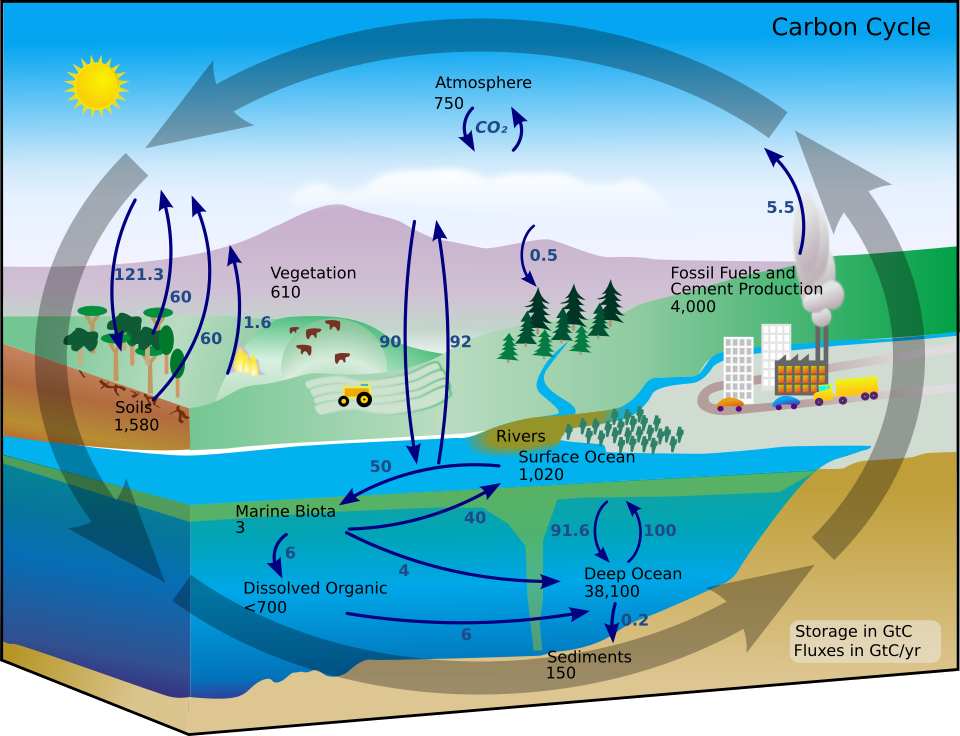
The carbon cycle
Wikimedia Commons (CC)
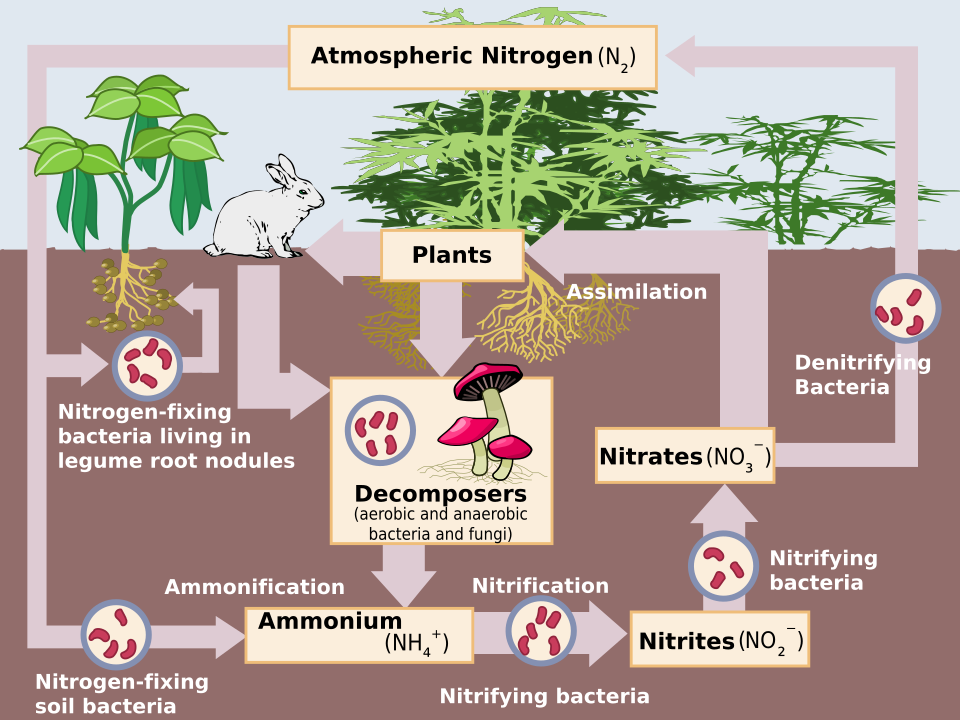
The nitrogen cycle
Wikimedia Commons (CC)
Key Points
- 1Decomposers (bacteria and fungi) break down dead organic matter.
- 2Bacteria secrete enzymes onto organic matter for external digestion.
- 3Fungi decompose tough materials like lignin and cellulose.
- 4Detritivores (earthworms, woodlice) physically break down matter.
- 5Temperature, moisture, oxygen, and material type affect decomposition rate.
Learning Outcomes
- Outline the concept of a microbiome; explore the role of microbiomes in promoting human health and nutrient cycling in soils
- Model the carbon cycle with reference to the roles of photosynthesis, respiration, decomposers, fossil fuels and carbon sinks
- Model the nitrogen cycle with reference to nitrogen fixation, nitrification, decomposition, denitrification